iDubai














































































































Books


iDubai
Specifications
Writings
iDubai
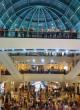
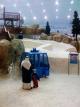
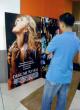
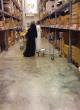
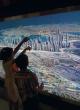
Most photographers returning from Dubai in the last few years would likely bring with them images of at least some of the celebrated (or notorious) features which make this place a nearly unique global site. These would include the colossal architectural and earth-moving projects that have produced the tallest skyscrapers in the world, the largest shopping malls, spectacular fantasy theme parks, underwater hotels, and man-made archipelagoes of island cities. But Joel Sternfeld's photographs exclude almost completely a sense of the immense proportions of this twenty-first-century dream world still in progress at this moment. Instead, his cell phone camera is turned in a different direction on events occurring on a smaller and more immediate scale. In many ways, the Dubai conjured in his photographs is a place we all know, even if we have never literally been there. Within the excess and singularity of this new global playground are many of the familiar and mundane features which processes of globalization have imposed all over the planet. Of course, the homogeneous Starbucks/shopping mall world is the milieu that Sternfeld's camera traverses, but what is important and affecting about his images is their disclosure of how human beings inhabit and experience such spaces, and how this is represented by a tiny digital camera wielded by an ambulatory observer. Clearly, the words inhabit and experience are problematic here because the artificial universe of Dubai is inimical both to the very idea of habitation and is an environment which undermines or even eradicates the historically accumulated meanings of what has been thought of as experience. What Sternfeld shows us, then, with all the nuance of his art, are people negotiating and subsisting in these profoundly alienating surroundings.
The indoor mall world of Dubai is a quintessential non-place in which people circulate, shop, eat, and spend time in various ways. A non-place is where it is assured nothing can really happen. It is where nothing will ever occur that could become part of a collective or individual memory and thus become a form of experience that could be preserved, communicated, and shared. In the late twentieth century, any huge international airport was a defining example of such a site, where the phenomenon of large numbers of people in transit neutralized any of the vitality or unpredictability of older models of a public space. Dubai can stand for a new delirious phase in the processes through which variegated human environments are appropriated and reshaped according to the imperatives of financial calculation. Space is drained of its long-standing qualitative features and its meanings and uses are determined by the wealth which can be extracted from it. The dynamism of urban culture over the last 150 years has been due to the persistence of alternative ways of constructing social spaces and networks. But in Dubai we see an extreme form of what the political thinker Guy Debord called the suppression of the street and all its potential unruliness and spontaneity. Sternfeld reveals a city from which history has been excluded except as spectacle (a mural of Renaissance Venice, a replica of a Chinese sailing ship). This dislocation of space from historical time implies a place where nothing unforeseen or unplanned can happen. Of course, this is a fantasy, as the numerous incidents of strikes and protests in Dubai by imported laborers and workers attest. Perhaps also the impact of global recession has left visible traces in its sleek surfaces, more for sale signs on its lavish condominiums, but its essential topography and operation no doubt remain unchanged.
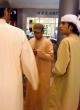
To reiterate, what interests Sternfeld most is the actuality of people within this simulation of public space. We see image after image of individuals who manifest in various ways that particularly modern condition of displacement, in which one's physical presence in a specific location is blurred and dispersed. What once would have been a contradictory state of being scattered among two or more places simultaneously becomes normalized. Not only is it a question of proliferating communication technologies, but it is equally a result of a built environment which, despite its myriad attractions and seductions, is incapable of engaging its inhabitants in any authentic or holistic connections. Sternfeld reveals this fundamental incongruity, where people are like drops of water gliding aimlessly on an utterly impermeable material. He pinpoints in his pictures a loose association of psychological states that are beyond boredom or indifference, beyond anticipation of something novel or unexpected.
Rarely has the pursuit of shopping in an affluent ambiance been presented as such a cheerless and somnambulant activity. We are far removed from the nineteenth-century arcades of Paris and other cities, the remote architectural ancestors of today's megamalls. It was within these expansive and well-lit interiors that the mobility and sensory stimulation associated with the intertwining of strolling, shopping, and looking produced part of the template for a modernized observer. But unlike that earlier modern appetite for stimulation and continual novelty, perception in Dubai is diffused, deflected away from visuality. Despite the ornamented and commodity-saturated spaces, things here seem anything but novel. They are as if frozen in a moment where everything has already been seen before, even though this repetition doesn't quell the habit of buying useless and unnecessary things. But if some of the logic of conspicuous consumption persists, it is now only one part of the operations through which identity is constructed and modified. The omnipresent cell phones are evidence of the never-ending labor of managing and enhancing one's virtual self. Time that once might have been spent in reverie or daydream (or even actual thinking) is now deployed in continually updating one's connectedness to the specific digital flows of affect and information through which a sense of loneliness or irrelevance is momentarily allayed. At stake here is not the overused notion of an attention deficit but of an attentiveness that migrates and is apportioned between the fluctuating points of attraction and solicitation that make up the increasingly dispersed framework of one's life. There is nothing condescending in Sternfeld's understanding of this world in which he too, with his iPhone, is fully embedded. A quiet empathy pervades the visual record of his own nomadic itinerary through these spaces and among its other visitors. In this regard, Sternfeld shares a sensibility with the acclaimed Chinese filmmaker Jia Zhangke, who has portrayed the dislocations of globalization in terms of individual human dispossession, for example in his films The World (2006) and Still Life (2008). Both Jia and Sternfeld show the individual caught between the derealization of urban space and the dematerialization and separation inherent in the pervasiveness of mobile information technologies.